
APHR Urges ASEAN: Rohingya Deserve Safety, Rights and a Path Home
August 26, 2025
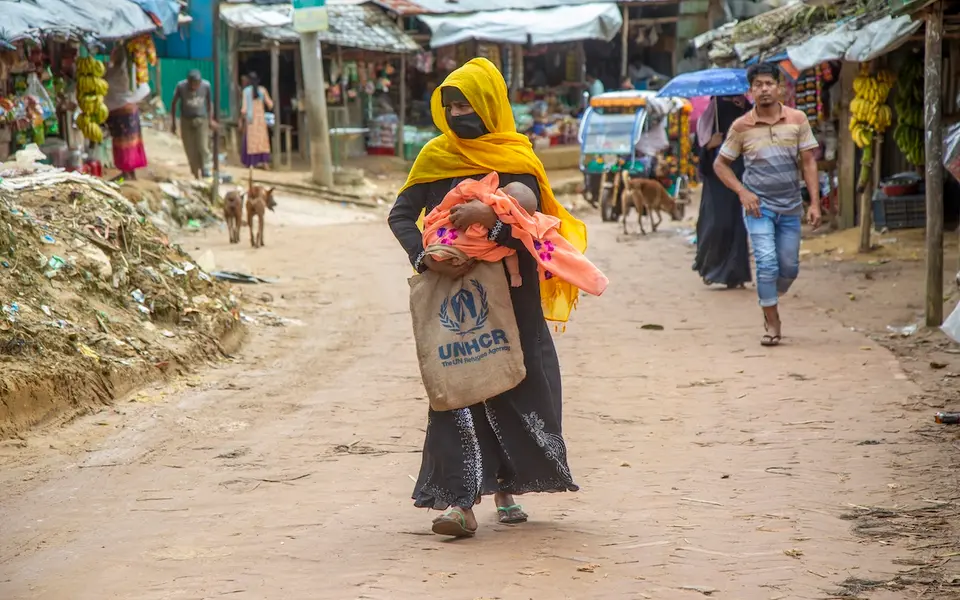
KUALA LUMPUR, 26 August 2025— On Rohingya Genocide Remembrance Day, the ASEAN Parliamentarians for Human Rights (APHR) stands in solemn solidarity with Rohingya survivors and refugees and reiterates their urgent demand for a safe, voluntary and dignified return to Myanmar.
Eight years on from the mass atrocities that drove so many from their homes, the crisis is intensifying. Humanitarian aid is shrinking, impunity continues and instability in Rakhine has left displaced communities at even greater risk. Women, children and persons with disabilities are especially vulnerable, facing sexual violence, trafficking, forced recruitment and other exploitation in overcrowded camps.
In this light, APHR reiterates that any regional response must not legitimize Myanmar’s junta and must be based on international law, including the Universal Declaration of Human Rights, the Convention on the Rights of the Child, CEDAW and the Convention on the Rights of Persons with Disabilities. These treaties, which ASEAN Member States have signed, protect the basic rights of everyone, including the Rohingya.
Building on these obligations, Mercy Chriesty Barends, APHR Chairperson and Member of the House of Representatives of Indonesia emphasized that, “ASEAN’s own human rights commitments protect asylum seekers and forbid discrimination, but they have not yet produced a strong regional system for refugee protection.”
“APHR therefore urges Malaysia as 2025 ASEAN Chair, to restore lifesaving aid, uphold non-refoulement and refuse any legitimization of the junta; and calls on the Philippines, incoming ASEAN Chair for 2026, to prioritise refugee protection with a rights-based regional framework and concrete handover commitments,” Barends added.
The network of Southeast Asian policymakers also stresses the crucial role of the ASEAN and the ASEAN Intergovernmental Commission on Human Rights (AICHR) in explicitly recognizing ‘refugee’ in regional deliberations, developing a durable refugee protection mechanism and raising the visibility of Rohingya needs within ASEAN processes.
In putting this forward, Charles Santiago, APHR Co-Chairperson and former Member of Parliament of Malaysia calls on parliamentarians across the region and beyond to help counter hate speech and reframe policy debates on protection and dignity rather than hostility. “Bring Rohingya voices into parliamentary debates and public hearings, work with civil society and refugee-led organisations to strengthen national laws and budgets, and oversee ASEAN commitments to ensure transparent, accountable implementation.”
Rohingya families deserve concrete guarantees that allow them to return home without fear and to rebuild their lives with full citizenship and safety. “Delaying protection and justice is not a neutral act; it is a decision that costs lives and wears down regional stability,” asserted Raoul Manuel, APHR member and former Member of the Philippine House of Representatives.
APHR makes a point of championing lawmakers to act. Parliaments have the power to change policy and public narrative by convening hearings, legislating protection and ensuring that refugee rights are respected in paper and practice.
From 1st to 5th of September 2025, a delegation of policymakers from Indonesia, Malaysia, Thailand and the Philippines will conduct an APHR Fact-finding Mission to Cox’s Bazar, Bangladesh to hear directly from Rohingya refugees and frontline groups. The mission will produce updated evidence and practical recommendations to sharpen ongoing advocacy efforts.
These findings are expected to underscore the reality that inaction and delay places lives at risk. ASEAN, its member states and regional parliaments must respond with urgency, compassion and a steadfast commitment to human rights, to protect vulnerable communities and uphold justice. ###

ASEAN Parliamentarians for Human Rights (APHR) was founded in June 2013 with the objective of promoting democracy and human rights across Southeast Asia. Our founding members include many of the region's most progressive Members of Parliament (MPs), with a proven track record of human rights advocacy work.