
Myanmar and Crisis Response (MCR)
Resources
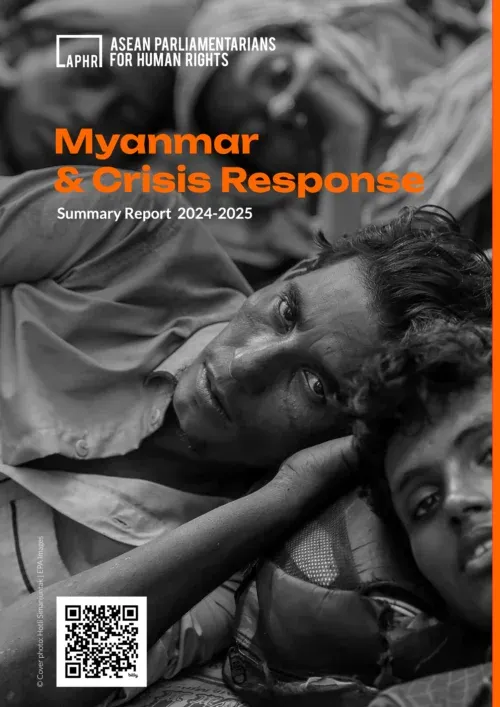
Myanmar & Crisis Response Report
A summary report on the ongoing crisis in Myanmar, detailing the humanitarian and political challenges faced by the country.
Download Report (PDF)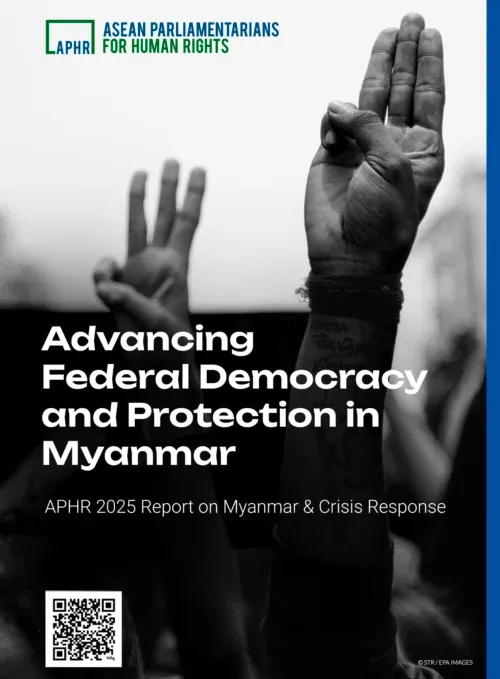
Advancing Federal Democracy & Protection in Myanmar
This report consolidates the key findings, analyses, and recommendations from activities conducted by the ASEAN Parliamentarians for Human Rights (APHR).
Download Report (PDF)What is the problem?
Four years after the February 2021 military coup, Myanmar faces a worsening humanitarian catastrophe, human rights emergency and political crisis. The junta's indiscriminate violence, mass displacement, and systematic repression have dismantled democratic structures and deepened the suffering of millions.
Since then, widespread anti-coup demonstrations have swept the country led by multisectoral groups of women, youth and students, workers, farmers with an aim to restore peace and democracy, including reinstating the democratically-elected government officials.
Under the guise of the flawed 2008 Constitution, the junta's push for national elections is widely seen as an attempt to legitimize authoritarian rule. Meanwhile, it has unleashed a continuing campaign of terror marked by forced conscription, killings, torture, arbitrary arrests, disappearances, looting, and severe restrictions on information through media blackouts and internet shutdowns.
In the years since the 2021 coup, pro-democracy movements and resistance platforms have emerged. At the same time, a form of “federalism from below” is taking shape, as community and ethnic-led governance bodies begin implementing inclusive models of administration, health, and education. These efforts reflect aspirations for greater autonomy and federal representation but remain vulnerable in the absence of strong coordinated national frameworks.
At the same time, Myanmar's humanitarian crisis is worsening, with nearly 22 million people in need of assistance, over 3.5 million displaced, and access to aid severely restricted. Refugees along border areas face insecurity and heightened risks, while ASEAN's Five-Point Consensus has yet to deliver meaningful progress, raising concerns about the bloc's credibility as the crisis deepens.
What are we doing about it?
In solidarity with the people of Myanmar and its struggle for democracy and restoration of peace, the Myanmar and Crisis Response (MCR) program was established to address the human rights violations, the humanitarian emergency, and the democracy movements led by the people through policy recommendations, evidence-gathering, parliamentary inquiries and multi-level advocacy campaigns.
APHR engages regional and international actors to push for accountability and sanctions against the junta. It also amplifies the voices of pro-democracy movements, supports “federalism from below,” and ensures diverse stakeholder perspectives are heard and provides a space to participate in the political transition process. In addition, APHR raises awareness on urgent issues including forced conscription, displacement, repressive law enforcement, and the impact of airstrikes on civilians.
💡 DID YOU KNOW: Founded as the ASEAN Inter-Parliamentary Myanmar Caucus (AIPMC) in 2004, APHR evolved in 2013 to reflect the broader human rights challenges of the region, championing parliamentary solidarity to address issues that affect democracy, fundamental freedoms and development.
APHR priorities on Myanmar and Crisis Response include:
- Promote Inclusive Federal Democracy in Myanmar
- Support locally-driven federal initiatives (“federalism from below”).
- Enable inclusive political dialogue among the NUG, ethnic actors, civil society, and women leaders.
- Strengthen democratic institutions and empower Myanmar lawmakers to uphold democracy and human rights.
- Advance Humanitarian Response and Protection for People in Crisis
- Advocate for effective delivery of humanitarian aid through local networks and cross-border facilities.
- Influence bilateral donors to prioritize Myanmar's humanitarian needs.
- Enhance refugee protection and promote regional coordination mechanisms.
- Ensure Justice, Accountability, and Rights-Based Governance
- Advance transitional justice and accountability mechanisms for crimes committed by the junta.
- Counter militarized economies and cross-border crime that fuel conflict and repression.
- Support women's political leadership to ensure gender-inclusive governance.
- Challenge the Legitimacy of the Military Junta and Push for Regional Action
- Reject the junta's attempt to legitimize its rule through sham elections.
- Advocate for Myanmar military regime's suspension from ASEAN.
- Strengthen Southeast Asian parliamentarians' advocacy for a people-centered, rights-based approach at ASEAN and international forums.
To support and learn more about our MCR campaigns and activities, visit: MCR Linktree
Join the Working Group on MCR
If you are a current Member of Parliament who wishes to join the MCR Working Group, please send an email to [email protected]
Stay updated, subscribe to our mailing list: Subscribe here
Relevant Publications
Showing 0 to 0 of 0 results
2026-07-15T10:14:33
ASEAN’s Re-engagement Risks Legitimizing Junta Without Delivering for Myanmar’s People
2026-07-11T13:35:49
APHR: ASEAN Must Not Fall Into the Junta’s Trap
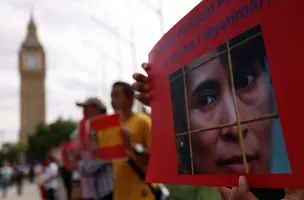
2026-07-07T14:48:35
Myanmar Junta’s Refusal to Allow ASEAN Special Envoy Access to Daw Aung San Suu Kyi Exposes the Hollow Promise of the Five-Point Consensus
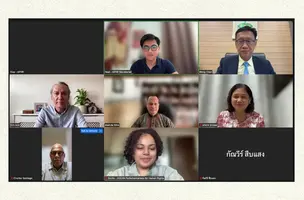
2026-06-23T17:51:28
‘Bargaining Chip for the Junta’: APHR Meets Kim Aris, Demands Verification of Aung San Suu Kyi’s Condition
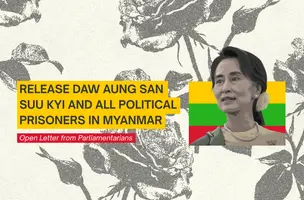
2026-06-19T09:32:07
Open Letter from Parliamentarians: A Call on ASEAN and Its Member States to Demand the Release of Daw Aung San Suu Kyi and All Political Prisoners in Myanmar
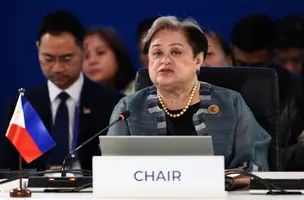
2026-06-10T19:22:54
APHR Welcomes ASEAN Special Envoy’s Intent to Engage Myanmar’s EROs, Urges Rights-Based and Inclusive Process

ASEAN Parliamentarians for Human Rights (APHR) was founded in June 2013 with the objective of promoting democracy and human rights across Southeast Asia. Our founding members include many of the region's most progressive Members of Parliament (MPs), with a proven track record of human rights advocacy work.