
APHR Mission Examines Safety, Funding Shortfalls and Accountability for Rohingya
September 01, 2025
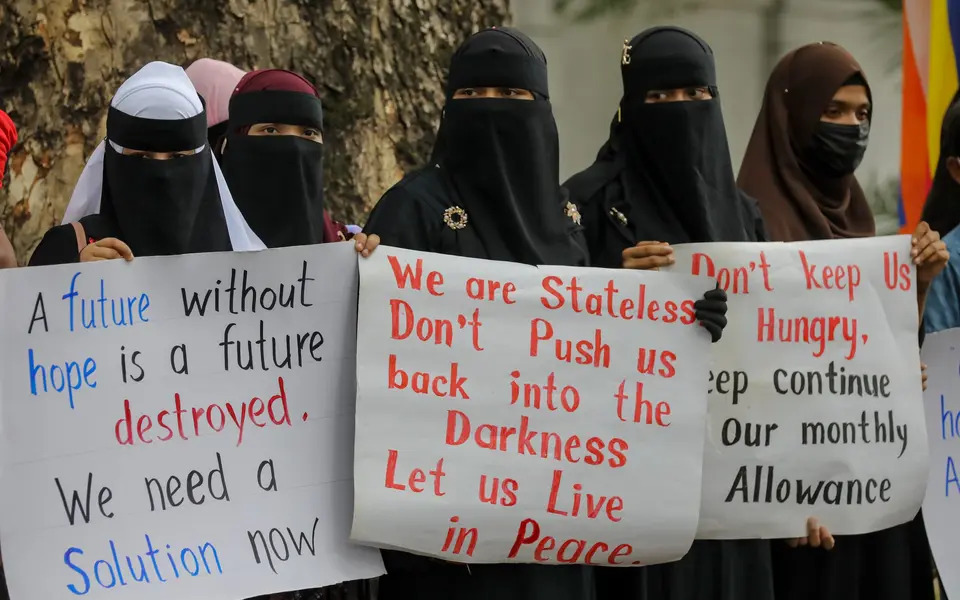
Cox’s Bazar, 1 September 2025— ASEAN Parliamentarians for Human Rights (APHR) today launches a fact-finding mission to Cox’s Bazar to assess the intensifying humanitarian and human rights crisis affecting Rohingya refugees and host communities.
This mission aims to follow-up on the key findings from the January 2018 APHR fact-finding mission to Bangladesh following the 2017 crackdown by Myanmar security forces on Rohingya Muslims in Northern Rakhine State.
The APHR delegation composed of lawmakers from the Philippines, Malaysia and Thailand will be on the ground from 1st to 5th of September to gather firsthand evidence, hear directly from affected communities and engage with humanitarian actors, Bangladeshi authorities and civil society.
This evidence-gathering initiative follows APHR’s established practice of regionally coordinated parliamentary engagement to protect rights and uphold accountability.
The mission has clear, interlinked objectives. It will assess the evolving human rights situation inside the camps, including restrictions on freedom of movement, access to education and healthcare, livelihoods and legal identity, food insecurity and rising incidents of gender-based violence and trafficking among others. It will evaluate the impact of declining international support and funding cuts on the provision of essential services and on the overall humanitarian response, documenting how these gaps deepen vulnerabilities for refugees, particularly women, children and persons with disabilities. The mission will examine socioeconomic and political pressures felt by host communities, including growing tensions due to refugee presence and how these dynamics risk further marginalization of the Rohingya, undermining their safety.
The APHR delegation will listen to Rohingya perspectives on durable solutions; voluntary, safe and dignified repatriation, third-country resettlement and local integration, and identify the barriers preventing refugees from exercising agency over their futures. Finally, the mission will identify avenues for the Government of Bangladesh, ASEAN and international partners to cooperate on a coordinated, rights-based regional response that includes accountability for atrocities committed against them in Myanmar.
Facts on the ground underscore the urgency of this task. Bangladesh currently hosts more than one million Rohingya in camps in southeastern Bangladesh, the world’s largest refugee settlement. Furthermore, this year marks eight years since widespread atrocities were carried out against the Rohingya in Myanmar’s Rakhine State. Those atrocities remain unaddressed and conditions inside Myanmar remain fundamentally unsafe for return. In Cox’s Bazar, pressure on services and infrastructure has become increasingly unsustainable. Against the backdrop of a global funding crisis, critical needs among both newly-arrived and long-settled populations are going unmet; food rations, clean drinking water, healthcare, cooking fuel, hygiene supplies and education are at risk of collapse.
APHR will publish findings and key recommendations from this mission to inform actions by policymakers, ASEAN, the international community and humanitarian actors. The organization stresses that delay costs lives and fuels regional instability. Evidence from this mission must underpin urgent, coordinated, rights-based action to protect refugees, ensure accountability and prevent further suffering. #

ASEAN Parliamentarians for Human Rights (APHR) was founded in June 2013 with the objective of promoting democracy and human rights across Southeast Asia. Our founding members include many of the region's most progressive Members of Parliament (MPs), with a proven track record of human rights advocacy work.